How AI T-Shirt Design Actually Works (and Why Yours Is One of One)
What happens in the thirty seconds between typing a sentence and seeing it on a tee: the model, the print file, the mockup, and the archive that guarantees nobody else ever gets your design.
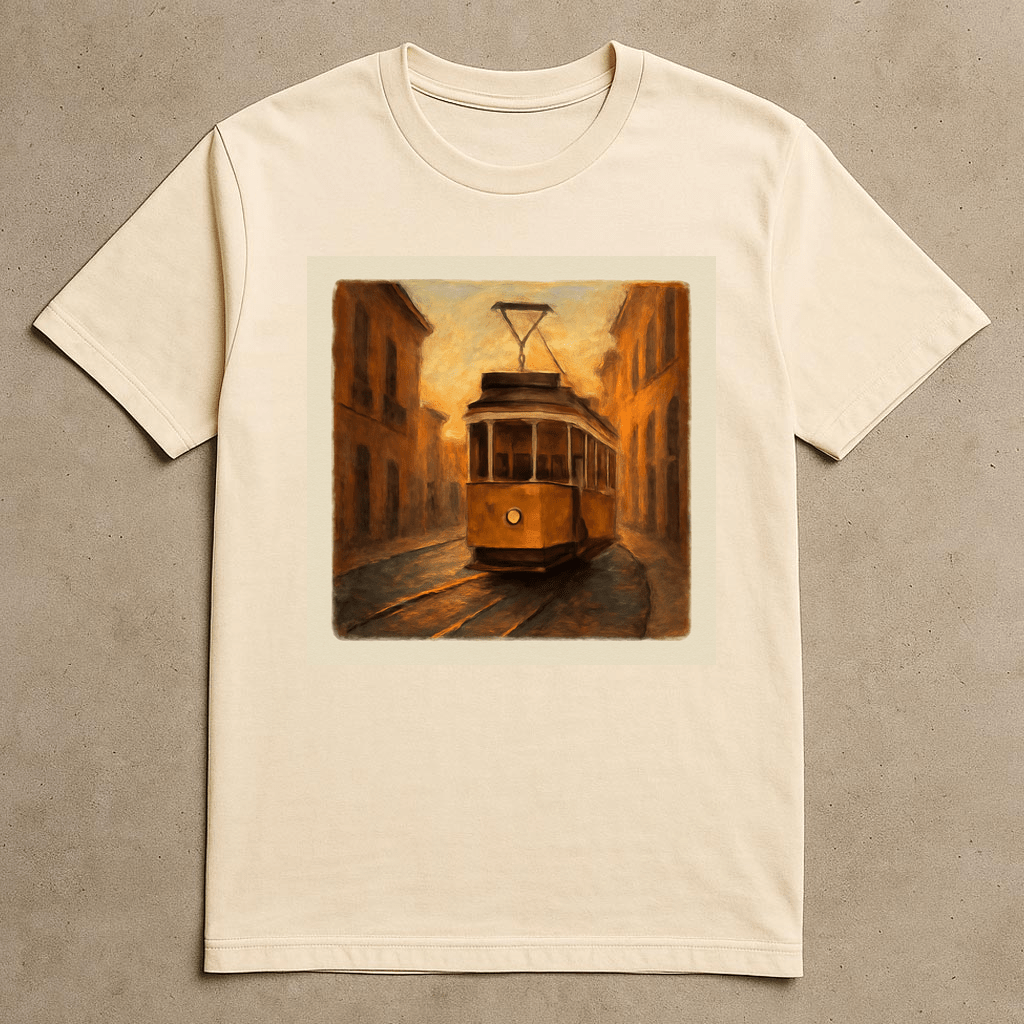
Type a sentence. Thirty seconds later there’s a t-shirt on your screen with that sentence painted on the chest, and if you buy it, nobody else on earth will ever get the same one. That’s the pitch. Here is what is actually happening underneath it, because “AI t-shirt design” gets used to describe a lot of things and most of them are not this.
The short version
An AI t-shirt design, the way we do it, has four steps: a language model turns your words into an image, a second pass presses that image onto a photo of a real garment so you can see it in context, a print-on-demand facility prints it directly onto cotton, and the prompt-and-image pair gets locked in an archive so it can’t be ordered again. Everything below is detail.
Step one: the sentence becomes a print file
When you hit Generate, your prompt goes to an image model (right now that’s OpenAI’s gpt-image-1). Before it gets there, we wrap it. If you picked a style, say Painterly or Neon Nashville, the style’s description gets appended: brushstroke texture, oil on canvas, soft lighting, that sort of thing. Then the model draws a 1024 by 1024 image from scratch.
It is not searching a library. It is not remixing clip art. There’s no folder of foxes somewhere that it picks from when you type “fox.” The model has learned what foxes, newspapers, and subway cars tend to look like and it paints a new arrangement of them every time. Type the same sentence twice and you get two different images. That’s not a bug; that’s the whole reason a one-of-one is possible.
The output is a square PNG. That file, untouched, is what eventually goes to the printer.
Step two: the mockup
A square PNG on a white background tells you nothing about how the shirt will feel. So a second, much faster step composites the design onto a photograph of the actual blank we print on: a cream Bella + Canvas 3001 tee or a bone-colored Independent Trading hoodie, laid flat on concrete. The design is scaled to the real print area (about 40 percent of the chest width on the tee) and placed where the printer will put it.
This is the image you see in the frame on the homepage. It’s a preview, not a render of the physical product, so fabric texture and color will differ a little. But placement and scale are accurate, which is the part people get wrong when they imagine a design in their head.
Step three: direct-to-garment printing
Once you order, the square PNG goes to Printful, which prints it using direct-to-garment (DTG). A DTG printer is essentially a very large inkjet that lays water-based ink straight into the cotton fibers, then cures it under heat. There are no screens, no minimum runs, and no setup cost per design, which is why printing exactly one of something is economically possible at all.
The tradeoff versus screen printing is that DTG colors sit slightly softer on the fabric. The painterly and surrealist styles love this; they look like they belong on cotton. Hard-edged neon designs come out a shade less electric than the screen preview. We’d rather tell you that here than have you find out at the door.
Production takes two to seven business days. Then it ships. Figure about ten days from click to closet.
The blanks (because the art deserves them)
A one-of-one painting on a flimsy promo tee would be a waste of the painting. So we only print on two garments: the Bella + Canvas 3001, a 4.2-ounce Airlume combed cotton tee that most of the good streetwear labels quietly use as their blank, and the Independent Trading heavyweight hoodie, 8.5-ounce fleece that gets softer for years. Both are premium blanks. Neither is what a bachelorette party orders in bulk.
That matters for the print, too. DTG ink sits best in tightly combed cotton, so the painterly detail survives the wash instead of cracking off a cheap poly blend.
Step four: the archive
This is the part nobody else does. When your piece ships, the exact prompt, the style you picked, and the generated image are logged with a serial number and moved to an archive. That combination is retired. The next person who types something similar gets something different, and even if they typed your exact sentence, the model would paint a new image anyway.
So “one of one” isn’t marketing shorthand for “limited.” It’s literal. There’s one file, one print, one serial number, and the serial number is on the neck tag.
What it costs and why
A tee is $29.99. A hoodie is $64. The generation itself costs us a couple of cents; the price is the blank, the DTG run, and the shipping, plus a margin that keeps the lights on and funds a standing commitment to donate a slice of profits to real-world art projects. There’s no upcharge for the design being unique, because uniqueness is a side effect of the process, not a feature we add.
What makes a prompt print well
A few things we’ve learned watching thousands of these come through:
- One subject, one setting. “A fox reading a newspaper on the subway” prints better than “a fox, a subway, a city, and some birds.”
- Name the light. “At golden hour,” “under a single candle,” “neon rain.” The model treats light as a subject.
- Pick a style and lean into it. Painterly for anything with fur or fabric. Minimalist for a single object. Baroque Noir if you want drama.
- Skip logos and celebrities. The model won’t do them well, and we won’t print them anyway.
If you want a longer list, we published fifty prompts that came out well, sorted by style.
The honest caveats
The model is unpredictable, on purpose. About one generation in ten comes back weird in a way you didn’t ask for. That’s why generating is free and buying is separate: you look first. The preview is a mockup, not a photo of your shirt. And because every piece is made to order, custom items can’t be returned for a change of mind, only for defects.
That’s the whole machine. A sentence, a model, a press, and a promise not to do it twice.